


Background: Why Alternatives to Litigation Exist
Indian courts face a heavy backlog, so the law actively encourages parties to resolve disputes outside the courtroom wherever possible. Alternative Dispute Resolution, commonly called ADR, covers all such methods. The three most common are mediation, where a neutral third party helps disputing sides reach their own agreement, conciliation, a similar but more proactive process where the neutral party may suggest solutions, and arbitration, a private adjudication process where an arbitrator delivers a binding decision similar to a court judgment.
Key Statutes Governing Dispute Resolution in India
1. Arbitration and Conciliation Act, 1996 The primary law governing both arbitration and, until recently, conciliation. It gives legal recognition to arbitration agreements, sets out the procedure for appointing arbitrators, and makes arbitral awards enforceable like court decrees. Section 34 allows a limited challenge to an award on narrow grounds such as fraud or conflict with public policy, while Section 36 governs enforcement.
2. Mediation Act, 2023 India’s first standalone mediation law, which received presidential assent on 14 September 2023. It formally separates mediation from conciliation, and Section 61 of the Arbitration and Conciliation Act was amended so that references to conciliation across other laws are now read as references to mediation under this new Act. The Mediation Act establishes the Mediation Council of India to register and regulate mediators and mediation institutions, and it makes mediated settlement agreements enforceable in the same manner as a court decree.
3. Code of Civil Procedure, 1908, Section 89 Empowers courts to refer pending civil disputes to arbitration, mediation, conciliation, or judicial settlement where the court believes there are elements of settlement acceptable to both sides.
4. Commercial Courts Act, 2015 Mandates pre-litigation mediation for certain commercial disputes before a suit can even be filed, unless the plaintiff seeks urgent interim relief from the court.
5. Legal Services Authorities Act, 1987 Provides for Lok Adalats, a form of statutory conciliation forum, and has been amended to encourage online and community dispute resolution alongside mediation.
6. Consumer Protection Act, 2019 Allows consumer disputes to be referred to mediation attached to Consumer Disputes Redressal Commissions, aligning consumer grievance handling with the broader mediation framework.
Exceptions and Recent Developments
Certain disputes, such as criminal matters, matrimonial cases involving cruelty allegations, and disputes affecting third-party rights, are generally excluded from mediation under the 2023 Act. On the arbitration side, a draft Arbitration and Conciliation (Amendment) Bill, 2024 has proposed removing conciliation provisions from the 1996 Act altogether, since these now sit within the Mediation Act, and renaming the statute simply the Arbitration Act. The draft bill also proposes formally recognizing arbitration conducted through audio-visual electronic means.
Frequently Asked Questions
Since the Mediation Act, 2023, conciliation under the Arbitration and Conciliation Act is now legally treated as mediation, so the two are largely merged in practice.
Yes, an arbitral award is binding and enforceable like a court decree, subject only to a narrow challenge under Section 34 of the 1996 Act.
Courts can refer pending suits to mediation under Section 89 of the Code of Civil Procedure, but the actual settlement still requires both parties’ consent.
Yes, the Commercial Courts Act, 2015 requires it for many commercial disputes before a suit can be filed, except where urgent interim relief is needed.
Yes, under the Mediation Act, 2023, a signed settlement agreement is enforceable in the same manner as a court judgment or decree.
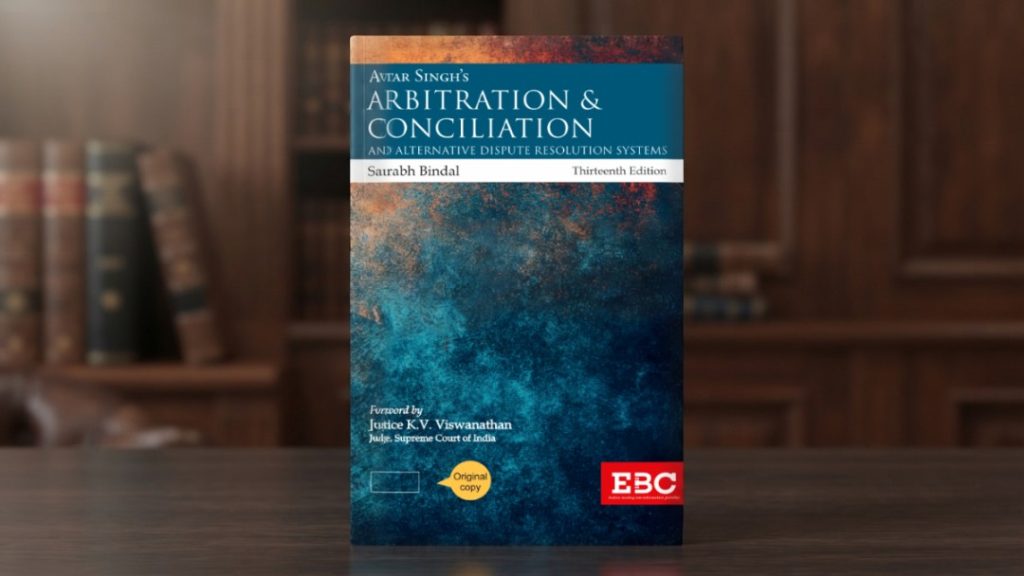
Want the deeper dive? Grab the reference book.



Arbitration in India: How It Works and When Courts Step In
[…] The Governing Law: Arbitration and Conciliation Act, 1996 […]