The CrPC had governed criminal procedure in India since 1973. As part of a larger overhaul of India’s criminal law framework, alongside the Bharatiya Nyaya Sanhita (replacing the Indian Penal Code) and the Bharatiya Sakshya Adhiniyam (replacing the Indian Evidence Act), the government introduced BNSS to modernize procedure, embed technology into investigation and trial, and set strict timelines to reduce delays. The BNSS contains 39 chapters and 531 sections, compared to 484 sections in the CrPC.
Category 1: Courts, Jurisdiction, and Officers
This category answers “which forum handles what” and is foundational for anyone new to criminal procedure.
- Sections 1 to 5: Preliminary provisions defining the scope, extent, and applicability of BNSS, including savings for other special or local laws.
- Sections 6 to 20: Establish the hierarchy of criminal courts, namely Sessions Courts, Chief Judicial Magistrates, Judicial Magistrates of First and Second Class, and Executive Magistrates, along with their respective powers and territorial jurisdiction.
- Sections 21 to 29: Define the specific powers courts may exercise, including sentencing limits for different classes of magistrates.
- Sections 30 to 34: Deal with the powers of superior police officers and the duty of magistrates and public servants to assist the police in maintaining law and order.
Category 2: Arrest and Rights of the Accused
This is one of the most frequently referenced categories in daily practice and for public awareness.
- Sections 35 to 62: Govern the arrest of persons, including circumstances in which police may arrest without a warrant, the requirement to inform an arrested person of grounds for arrest, the right to inform a relative or friend, restrictions on arrest of certain categories of persons, and the procedure for medical examination of the arrested person.
- Notable safeguards include the requirement of body-worn or fixed CCTV recording in some circumstances, and stricter conditions before arresting persons in cases involving offences punishable with less than three years of imprisonment where the accused is above a certain age or has a specified health condition.
Category 3: Search, Seizure, and Compelling Attendance
Relevant for both investigators and defense counsel challenging procedural compliance.
- Sections 63 to 90: Cover summons and warrants of arrest, including procedures for issuing, executing, and cancelling them.
- Sections 91 to 105: Deal with proclamation and attachment of property of absconding persons, and search of places or persons for documents, digital evidence, or stolen property. This chapter also formally recognizes electronic and digital records as valid categories of evidence to be searched and seized.
Category 4: Preventive Action and Maintenance of Public Order
Useful for understanding how magistrates can act before an offence occurs, rather than only after.
- Sections 125 to 142: Empower magistrates to require security for keeping the peace or maintaining good behavior, and to take preventive action, including orders in urgent cases of nuisance or apprehended danger.
Category 5: Investigation and FIR
Arguably the most consequential category, since it shapes the entire trajectory of a case.
- Sections 173 to 187: Cover the recording of First Information Reports, including provisions allowing FIRs to be filed electronically in specified circumstances, recording of statements of witnesses, and the process of investigation by police.
- This chapter also introduces mandatory forensic investigation for offences punishable with seven years of imprisonment or more, a marked departure from the CrPC’s discretionary approach.
- Statutory timelines are built into this chapter, requiring police to generally complete investigation and forward a report to the magistrate within prescribed periods depending on the nature of the offence.
Category 6: Cognizance, Complaints, and Commencement of Proceedings
Bridges the gap between investigation and trial.
- Sections 190 to 210: Explain how a magistrate takes cognizance of an offence, either upon a police report, a complaint, or information received, and the subsequent process of issuing process to the accused.
Category 7: Framing of Charge
- Sections 234 to 247: Set out how charges are framed against an accused, the contents a charge must contain, and the procedure for altering a charge during trial if required.
Category 8: Trial Procedures by Case Type
BNSS retains the CrPC’s approach of prescribing different trial procedures depending on the severity and nature of the offence.
| Trial Type | Sections | Typical Use |
|---|---|---|
| Sessions Trial | 248 to 258 | Serious offences triable by a Sessions Court |
| Warrant Trial | 259 to 269 | Offences punishable with more than two years imprisonment |
| Summons Trial | 274 to 282 | Less serious offences punishable with up to two years |
| Summary Trial | 283 to 288 | Petty offences requiring quick disposal |
Category 9: Judgment, Appeal, Reference, and Revision
- Sections 392 to 393: Prescribe how a judgment must be pronounced, its language, and its contents.
- Subsequent chapters (not detailed here for brevity) address appeals against conviction or acquittal, reference of legal questions to the High Court, and revisional powers of superior courts over subordinate court orders.
Category 10: Bail and Custody Safeguards
- BNSS retains and reorganizes the bail framework from the CrPC, covering regular bail, anticipatory bail, and default bail where investigation is not completed within the statutory period.
- New safeguards address prolonged incarceration of undertrial prisoners, including provisions that account for time already spent in custody when considering release.
Category 11: Victim Rights and Participation
A distinctly strengthened category compared to the CrPC.
- Investigating officers must update victims on the progress of investigation, generally within 90 days of the information being recorded.
- Victims have a right to be heard before bail is granted to an accused in serious offences.
- Provisions also address compensation and restitution mechanisms for victims of crime.
Category 12: Special and Limited Applicability Provisions
- Certain chapters relating to public order and preventive action have limited applicability in specified tribal areas unless the State Government extends them by notification. Practitioners working in such regions should verify applicability before relying on general provisions.
Frequently Asked Questions
BNSS came into force on July 1, 2024, replacing the CrPC, 1973.
Procedural law generally applies prospectively to ongoing investigations and trials, though specific transitional provisions govern pending matters. Each case should be checked against the applicable transitional clause.
Sections dealing with arrest (35 to 62), FIR and investigation (173 to 187), and the relevant trial procedure category are typically the most frequently used in daily practice.
Yes, for offences punishable with seven years or more of imprisonment, forensic investigation has been made mandatory.
It requires investigation updates to victims within 90 days and grants victims a right to be heard before bail is granted in serious offences.
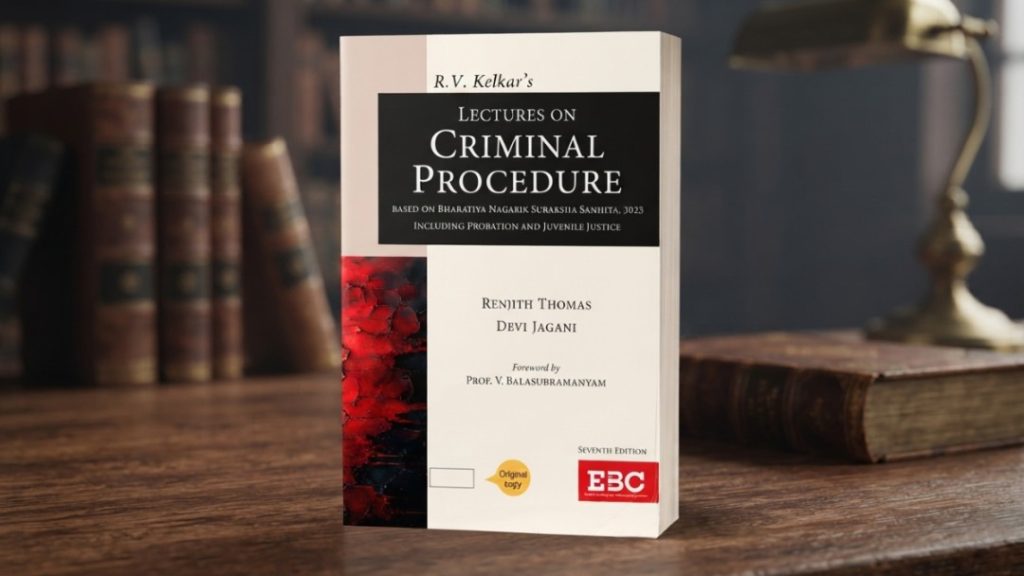
Want the deeper dive? Grab the reference book.