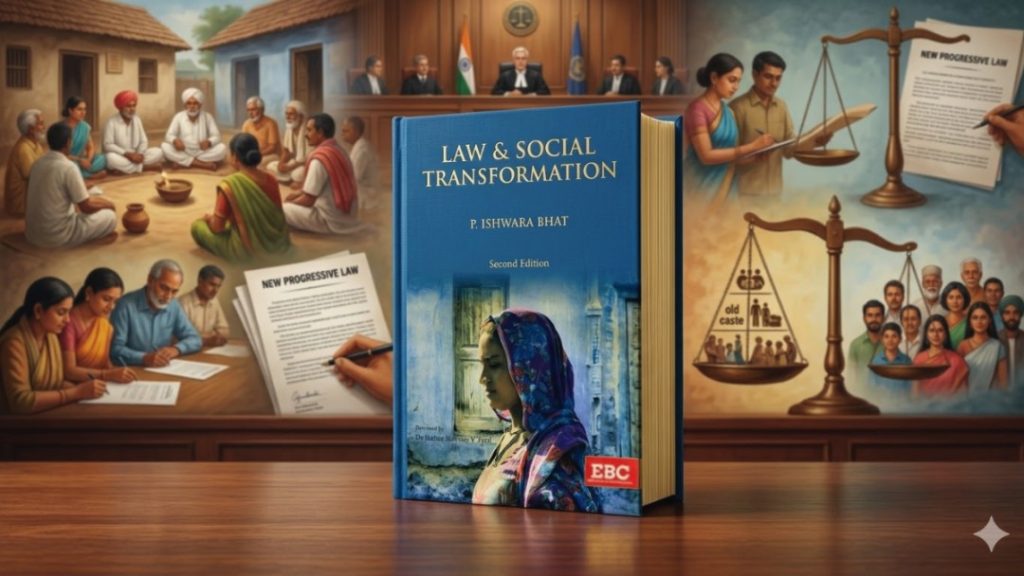
Let’s Start With Something We See Every Day
Think about this, why do we have the right to education? Why are there laws against discrimination? Why can people challenge unfair treatment in court?
None of this happens automatically. It happens because law actively shapes society.
In India, law isn’t just about maintaining order, it plays a major role in bringing change, promoting equality, and solving social problems.
So, What Does “Law Shaping Society” Really Mean?
At its core, it means this:
Law doesn’t just reflect society, it tries to improve it.
For example:
- When society faced inequality, laws introduced reservations
- When women faced discrimination, protective laws were created
- When education became essential, it was made a legal right
This shows that law is used as a tool to fix gaps in society.
The Backbone of It All: The Constitution
In India, most social change through law is guided by the Constitution of India.
It sets out:
- Fundamental Rights protect freedoms and equality
- Directive Principles guide the government to improve social and economic conditions
Together, they act like a roadmap for building a fair society.
Managing Diversity in a Complex Society
India is incredibly diverse, different religions, languages, cultures, and identities.
So how does law keep everything balanced?
It allows freedom while maintaining order. For instance:
- Article 25 of the Constitution of India protects religious freedom
- Cultural rights ensure communities can preserve their identity
The goal is simple,
Unity without forcing uniformity.
Empowerment Through Law: Making Equality Real
One of the biggest roles of law is empowerment.
Over time, laws in India have helped uplift groups that were historically disadvantaged.
Where this is clearly visible:
- Backward Classes:
Reservation policies create access to education and jobs - Women:
Laws address safety, equality, and workplace rights - Children:
Legal protections ensure education, care, and safety
These are not just rules, they are steps toward real equality in everyday life.
When Society Changes, Law Evolves Too
Society today is not the same as it was decades ago, and law has had to keep up.
Think about:
- Changing family structures
- Economic reforms and globalization
- Digital courts and online services
- Legal responses during pandemics
Law constantly adapts to stay relevant.
This flexibility is what makes law a living system, not a fixed rulebook.
The Role of Courts: Interpreting and Expanding Rights
Courts play a crucial role in shaping social change.
They:
- Interpret laws in modern contexts
- Protect fundamental rights
- Step in when laws fall short
Many important rights and protections in India have been strengthened through judicial decisions.
If you’d like to explore this topic in more depth, this resource is worth referring to.