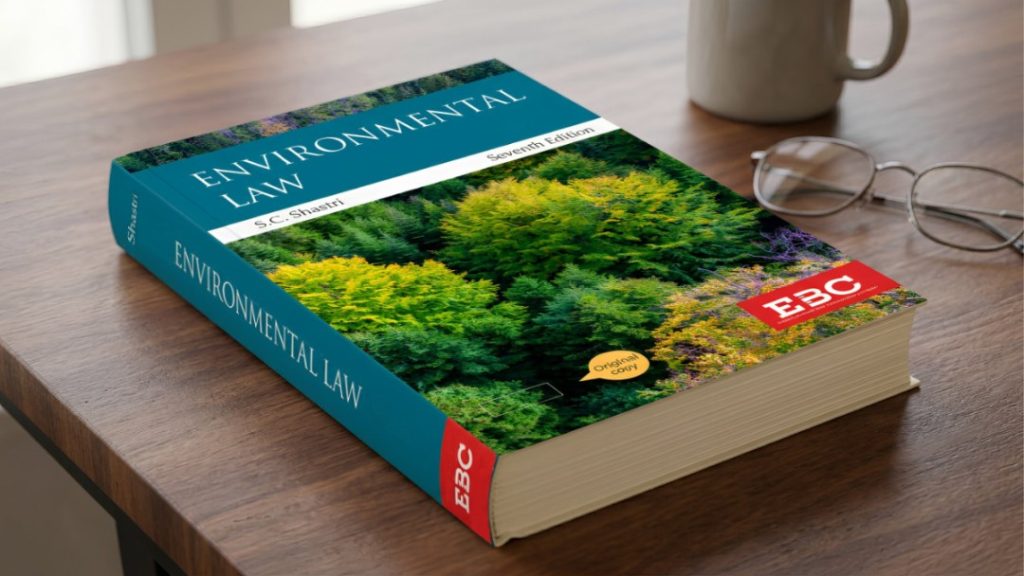
Environmental governance in India operates through an institutional regulatory framework designed to prevent, control, and reduce pollution. At the core of this framework are the Pollution Control Boards, which function as the primary statutory authorities responsible for implementing environmental laws across the country.
India follows a dual regulatory structure, consisting of the Central Pollution Control Board (CPCB) and State Pollution Control Boards (SPCBs). These institutions form the backbone of pollution monitoring, environmental compliance, and enforcement mechanisms under Indian environmental law.
Legal Basis of Pollution Control Boards in India
1. Water (Prevention and Control of Pollution) Act, 1974
The Pollution Control Boards were first established under the Water (Prevention and Control of Pollution) Act, 1974.
Key objectives:
- Prevention and control of water pollution
- Maintaining or restoring wholesomeness of water bodies
- Establishment of Central and State Pollution Control Boards
Under this Act:
- The CPCB coordinates nationwide pollution control activities.
- SPCBs implement regulatory measures within states.
2. Air (Prevention and Control of Pollution) Act, 1981
The scope of Pollution Control Boards expanded through the Air (Prevention and Control of Pollution) Act, 1981, empowering them to regulate:
- Industrial emissions
- Vehicular pollution standards
- Air quality monitoring
- Declaration of Air Pollution Control Areas
SPCBs became the primary authorities granting consent for industrial operations affecting air quality.
3. Environment (Protection) Act, 1986
After the Bhopal Gas Tragedy, India enacted the Environment (Protection) Act, 1986, an umbrella legislation granting wide powers to the Central Government.
Under this Act, Pollution Control Boards act as implementing and monitoring agencies, enforcing:
- Environmental standards
- Hazardous waste regulations
- Environmental impact compliance
- Industrial discharge norms
Structure of Pollution Control Boards
Central Pollution Control Board (CPCB)
The Central Pollution Control Board functions under the Ministry of Environment, Forest and Climate Change.
Primary functions include:
- Advising the Central Government on pollution control
- Coordinating SPCBs
- Setting national environmental standards
- Conducting nationwide environmental monitoring
- Publishing air and water quality data
State Pollution Control Boards (SPCBs)
Each state establishes its own Pollution Control Board.
Core responsibilities:
- Granting Consent to Establish (CTE) and Consent to Operate (CTO) to industries
- Inspection of industrial units
- Monitoring pollution discharge
- Initiating prosecution against violators
- Closure or restriction orders for non-compliant industries
Regulatory Powers and Functions
1. Monitoring and Assessment
Pollution Control Boards regularly:
- collect air and water samples,
- inspect industrial facilities,
- monitor emission standards,
- operate environmental laboratories.
India currently operates hundreds of continuous ambient air quality monitoring stations under CPCB supervision.
2. Consent Mechanism for Industries
No industry likely to discharge pollutants can legally operate without permission from SPCBs.
Two-stage approval:
- Consent to Establish (before construction)
- Consent to Operate (before functioning)
Violation may lead to penalties or shutdown orders.
3. Enforcement and Penal Action
Pollution Control Boards may:
- issue improvement notices,
- order closure of industries,
- disconnect electricity or water supply,
- initiate criminal prosecution.
Penalties arise under the Water Act, Air Act, and Environment Protection Act.
4. Environmental Standards Setting
The CPCB prescribes:
- emission limits,
- effluent discharge standards,
- ambient air quality norms,
- waste handling requirements.
These standards apply nationwide.
Role in Environmental Governance
Pollution Control Boards perform a preventive as well as corrective function by:
- regulating industrial growth,
- ensuring sustainable development,
- protecting public health,
- balancing economic development with ecological preservation.
They also assist courts and tribunals, including environmental adjudicatory bodies, through technical reports and expert assessments.
Challenges Faced by Pollution Control Boards
Despite statutory authority, several operational issues persist:
- manpower shortages,
- limited technical infrastructure,
- rising industrialization pressures,
- compliance monitoring difficulties,
- dependence on state governments for enforcement strength.
Scholarly and judicial discussions frequently highlight the need for institutional strengthening.
Recent Developments and Digital Monitoring
Modern reforms include:
- Continuous Emission Monitoring Systems (CEMS)
- Online consent management systems
- Real-time air quality indices
- Public disclosure of pollution data
These initiatives aim to improve transparency and regulatory efficiency.
To know more about this topic, you may check out this reference.