The Doctrine of Proportionality is an important principle in constitutional law. It is used by courts to check whether the government’s actions are fair, reasonable, and not excessive, especially when they affect fundamental rights.
In simple words, this doctrine asks:
Is the government’s action too harsh for the goal it wants to achieve?
What Is the Doctrine of Proportionality?
The Doctrine of Proportionality means that:
- The action taken by the State must be appropriate,
- necessary, and
- not more restrictive than required.
The State can restrict rights, but only to the extent needed, not beyond that.
The punishment or restriction must match the objective.
Constitutional Basis in India
The doctrine is not written directly in the Constitution of India, but it has been developed by courts through interpretation, mainly under:
- Article 14 – Right to Equality
- Article 19 – Reasonable restrictions on freedoms
- Article 21 – Right to life and personal liberty
It is closely linked to the idea of “reasonable restrictions”.
Why Is This Doctrine Important?
Without proportionality:
- the State could impose harsh laws for small problems,
- fundamental rights could be easily misused or suppressed.
With proportionality:
- citizens’ rights are protected,
- State power is checked and balanced.
It ensures that democracy functions fairly.
How Does the Doctrine Work?
Courts usually examine four basic questions:
Legitimate aim
Is the government’s objective lawful and important?
Rational connection
Is there a logical link between the action and the objective?
Necessity
Is there a less restrictive alternative available?
Balancing
Does the harm caused outweigh the benefit?
If the answer fails at any stage, the action is considered disproportionate.
Application in Indian Constitutional Law
1. Fundamental Rights under Article 19
When freedoms like speech, movement, or assembly are restricted, courts check:
- whether the restriction is reasonable, and
- whether it is proportionate to the problem.
2. Article 21 (Personal Liberty)
After expanding Article 21, courts now examine:
- fairness,
- reasonableness,
- proportionality of laws affecting life and liberty.
Why the Doctrine Is Trending Today
The doctrine is increasingly used in cases involving:
- freedom of speech,
- internet shutdowns,
- preventive detention,
- surveillance,
- public order vs individual liberty.
As State power grows, judicial scrutiny through proportionality becomes more important.
Importance for UPSC & Law Exams
This doctrine is important because:
- it links Fundamental Rights and Reasonable Restrictions,
- it shows the role of judiciary in protecting liberties,
- it is often asked in GS-II, constitutional law papers, and judicial exams.
FAQ on the Doctrine of Proportionality
Q1. Why can’t the government restrict Fundamental Rights freely?
Answer:
Because Fundamental Rights are essential for democracy. The government can restrict them only for valid reasons like public order or security, and even then, the restriction must be reasonable and proportionate, not excessive.
Q2. What does “proportional” actually mean in simple terms?
Answer:
Proportional means not too harsh and not too weak. The government’s action should be just enough to solve the problem, not more than what is necessary.
Q3. Can a good objective still fail the proportionality test?
Answer:
Yes. Even if the objective is good (like maintaining public order), the method used can still be wrong if it unnecessarily harms individual rights or if a less restrictive option was available.
Q4. How is proportionality different from arbitrariness?
Answer:
- Arbitrariness means acting unfairly or without reason.
- Proportionality checks whether the action is fair, necessary, and balanced.
A law can be struck down if it is either arbitrary or disproportionate.
Q5. Why is the Doctrine of Proportionality important today?
Answer:
Because modern governments have wide powers—surveillance, internet restrictions, preventive detention, etc. The doctrine ensures that individual liberty is not sacrificed unnecessarily in the name of governance or security.
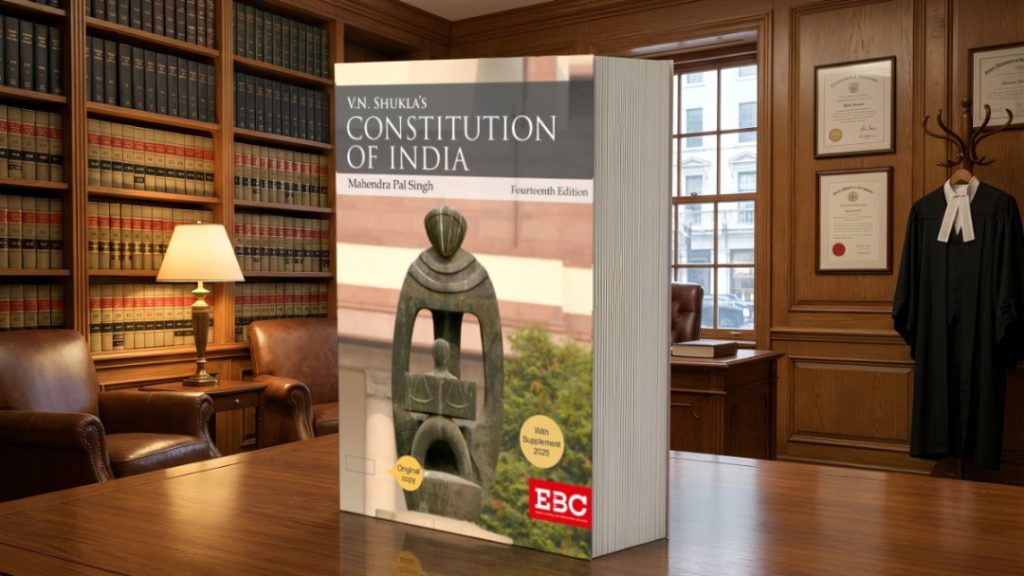
For reference: V N Shukla’s Constitution of India